Pages

Showing posts with label Ernobius mollis. Show all posts

Wednesday, June 2, 2021

The bycatch begins

The moth traps have produced little of anything over recent months due to cold temperatures and either drought or incessant rain. Over the last week, things have begun to pick up although still poor compared to recent years.

Not only moths have been turning up. There have been a number of flies, caddis and other inverts turning up too. Monday night also saw the first beetles of the year paying a visit and for me the beetles are always the best part of looking through the trap the following morning. I often see species that I never see anywhere else and so there's always the potential of something new turning up, and the last catch lived up to this.

First up were a couple of familiar faces....

Ernobius mollis. I've recorded this 3 times now and all have been to MV.

Cypha sp. This was a female and is presumably longicornis. I normally find these through suction sampling or sweeping.

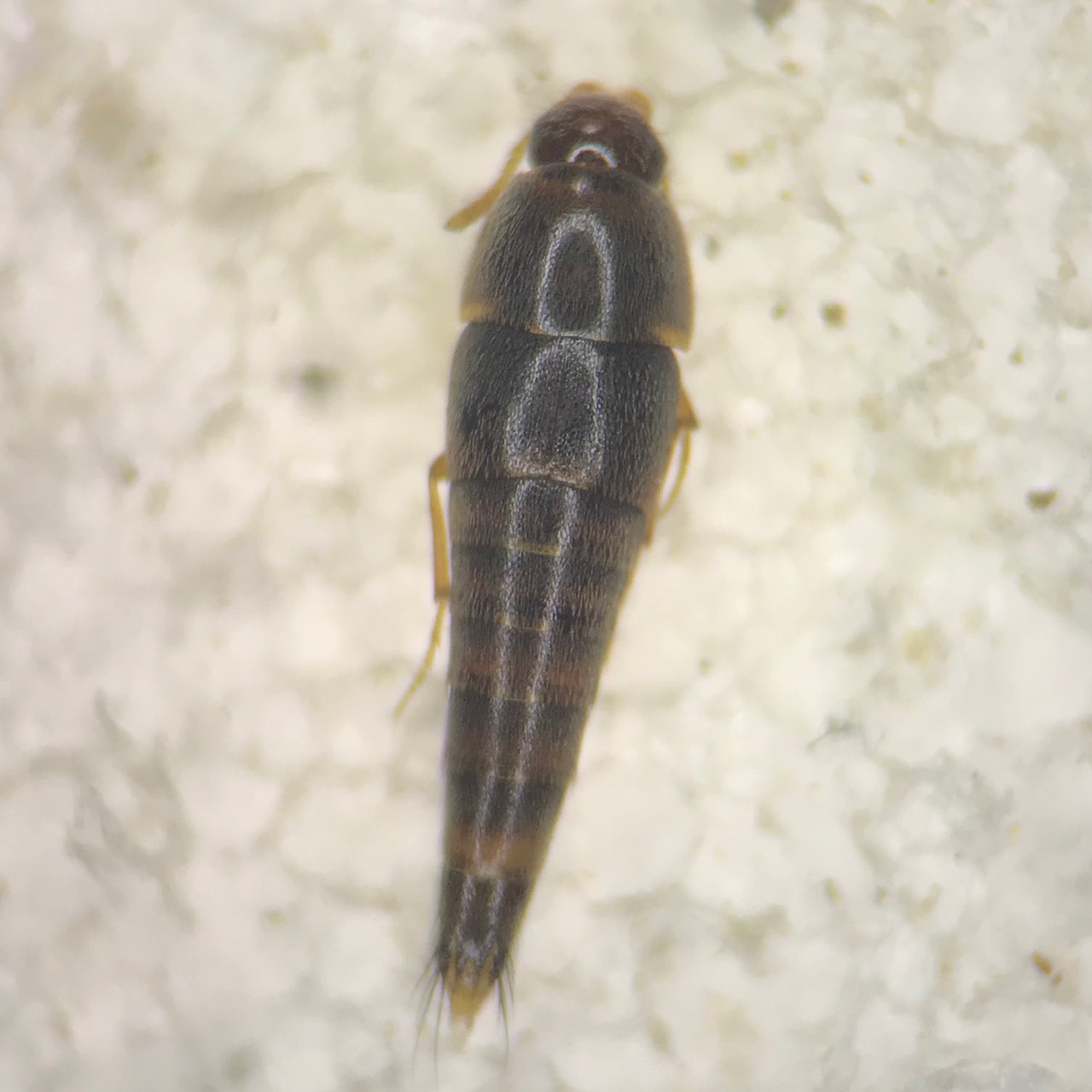
There was also a third beetle scuttling around the bottom of the trap trying to remain hidden under egg boxes. At first glance it was obviously a leiodid and I initially suspected it was a species of Catops but closer inspection revealed it to be a Choleva and I've only seen a Choleva once before.  There are 10 species in this genus and they are associated with mammal nests and runs, presumably feeding on some type of waste.

The physical differences in body shape can be quite subtle and as I found last time, a dissection can sometimes clinch the ID quite quickly.


This individual was a female and I manage to mangle the ladyparts as I removed them but still was able to distinguish that this was a female C. angustata from the shape of the abdominal plates.

This seems to be one of the more commonly encountered species of Choleva with over 200 records on NBN, the vast majority of which are south of the line between the Humber and the Severn. With odd records up to the Highlands I guess this southerly concentration may just represent recording bias. Anyway, a cool looking, long legged beetle to kick the light trapping season off. With 120 species recorded to light last year I wonder how 2021 will compare?

Friday, April 3, 2020

Odds and sods

It's been much colder this week and there's been far less insect activity in the garden. Trying to fit in work, home schooling and everything else has been a bit of a struggle but I'm lucky to have a garden and a a bit of space to disappear to when the mood takes me. If only I had access to anything but boring arable fields for my daily exercise allowance I'd be a relatively happy man.

I have managed to fit in a couple of hours this week looking at previously caught beetles. Ones that were put away for a rainy day. 

This first one came to a MV moth trap at the RSPB's Lodge reserve in summer 2019. In the same trap was the longhorn Arhopalus rusticus and the dung beetle Aphodius zenkeri as well as the moth bycatch 😀

It keyed easily to Ernobius mollis once I'd worked out the family! It's one of the wood-boring Ptinids. It's the most commonly encountered member of its genus with records north to the Scottish highlands.


The next two came from the early morning jaunt to the River Cam for a spot of tussocking at the start of March. Boy, does that feel like a lifetime ago now!

First up, was a beetle that I couldn't even assign to family. I suspect because initially it was rather elongated after having been on vinegar soaked tissue for a month. With some help I now know that is a species of Atomaria. One of 46 species split into 2 subgenera. This one is the larger of the 2 groups and is somewhere near gutta/atra. However, there is a new key due in July when the next volume of  Beetles of Britain and Ireland lands, so I'll wait until I have that before having another go.


This one was obviously a Sepedophilus sp. with it's hairy pronotum. Going through the key it went to the pedicularius/nigripennis couplet. The elytra size ratio (width to length) and overall coloration looked better for the former. Top coleopterist Peter Hodge agreed. This is apparently quite a scarce species found in sedge litter in wetland habitats. Looking at the NBN map, there is another recent record from very close by, plus others a bit further away at Wicken Fen.


Still plenty of small fry left to ID on these days of containment. I seem to have recorded about 140 species so far this year, with a few more still to ID. Much better than previous years and more down to extra searching effort then any step change in ability I imagine.....